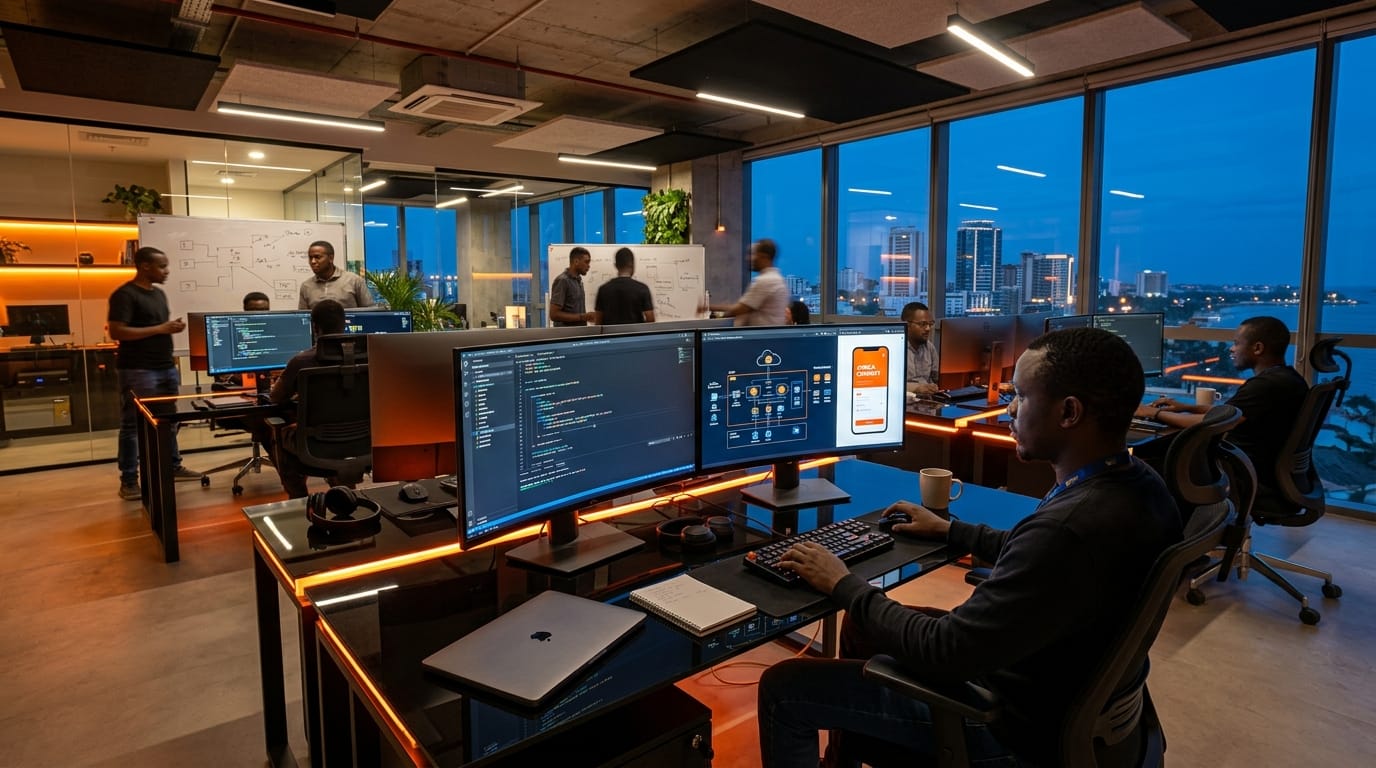
Mobile money is the dominant payment method in Tanzania. Over 60% of the adult population uses mobile money services daily. For developers building apps targeting the Tanzanian market, payment integration is not optional — it is essential.
1. Understanding the Payment Landscape
Tanzania's mobile money ecosystem is dominated by three providers:
- M-Pesa (Vodacom): Market leader with the largest agent network. Uses the Vodacom M-Pesa API (OpenAPI) for C2B and B2C transactions.
- Airtel Money: Second largest provider with competitive transaction fees. Offers REST APIs for collections and disbursements.
- TigoPesa (now MixxPay by Axian): Strong presence in urban areas with seamless USSD integration.
2. API Integration Architecture
We recommend a unified payment gateway pattern: build a single internal API that abstracts all three providers behind a common interface. This allows your application code to call one endpoint while the gateway routes to the appropriate provider based on the customer's phone number prefix.
3. Security Considerations
- Webhook Verification: Always verify payment callback signatures to prevent fraud. Each provider uses different signing mechanisms.
- Idempotency Keys: Mobile networks are unreliable. Implement idempotency keys on all payment requests to prevent double charges.
- PCI Compliance: Never store raw payment credentials. Use tokenization for recurring payments.
4. Testing in Sandbox
All three providers offer sandbox environments. We strongly recommend extensive testing with simulated transactions before going live. At FikraForge, we maintain a comprehensive test suite that covers timeout scenarios, partial payments, and callback failures.